
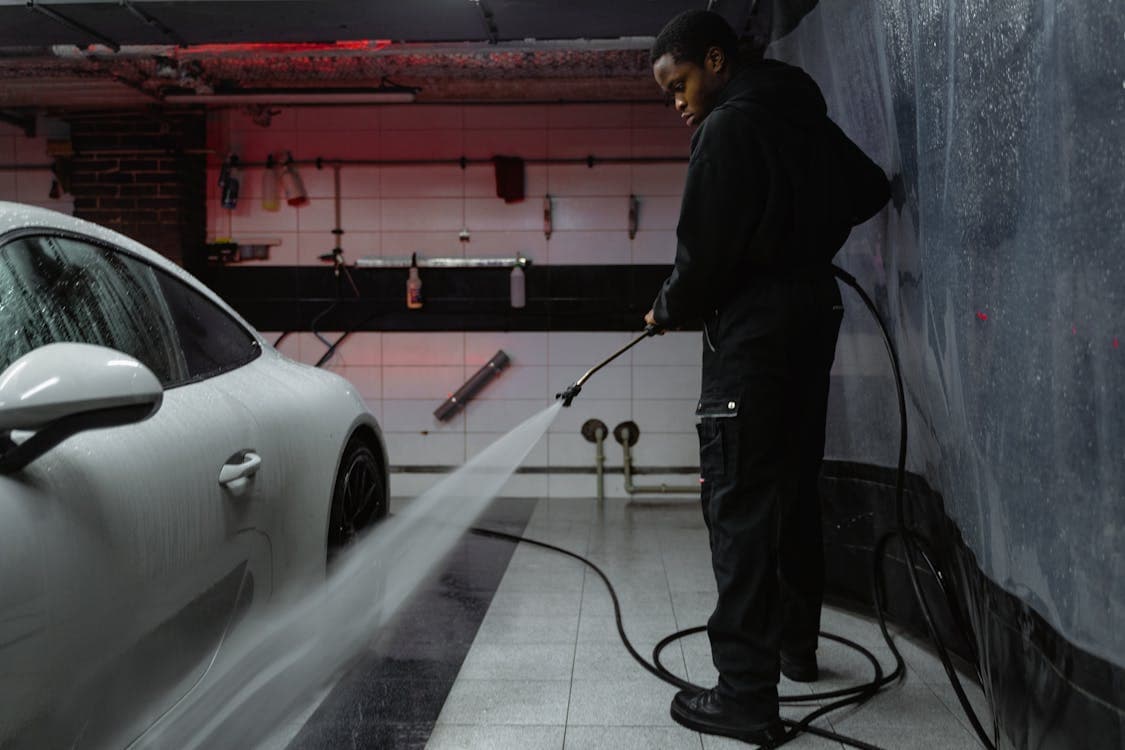
A look at the environmental impact of professional pressure washing and how responsible companies minimise it.
Pressure washing uses a significant volume of water, which is an environmental consideration. However, it's important to contextualise this: a professional clean that takes two hours typically uses less water than leaving a garden hosepipe running for the same period. Modern commercial pressure washing equipment is designed to maximise cleaning power while minimising water use, making professional cleaning relatively efficient per unit of cleaned area.
The main environmental concern with pressure washing is the run-off — the water mixed with cleaning agents, moss, algae, and debris that flows off the surface during cleaning. Responsible companies use biodegradable cleaning products and manage run-off to prevent it entering watercourses or drains. Always ask what cleaning products a company uses and how they handle run-off on your specific property.
The ecological impact of biological growth itself is also worth considering. Moss and algae growth on hard surfaces isn't neutral — it can block permeable paving drainage systems, introduce seeds that spread into garden borders, and create damp conditions that damage property. Regular cleaning keeps surfaces in good condition and prevents the need for more disruptive remediation work later.
Need a Professional Clean in the East Midlands?
JPS Jetwashing provides professional pressure washing, driveway cleaning, patio cleaning, gutter clearing, and fascia cleaning across Peterborough and the surrounding area. Free quotes. Fully insured.
Get a Free Quote